ENVIRONMENT: REVIEW SHEET
Indigenous humanity vs settler humanity
All my relations.
This view of the world recognizes (as Western science now has) that we are all made of the same stuff, and all at least distantly related to one another. Not just all humans (though that's an important recognition, and difficult for many!), not just humans and other primates, but everything alive on the planet is related (this is science: humans share more than half of our DNA with bananas, for instance). Indigenous people see themselves as part of a community of living beings.
Settler attitudes toward nature and other human beings
(White male) Human Supremacy
The rest of nature can be
- studied as objects through science
- controlled by force and by self-imposed discipline
- exploited and extracted for gain
- turned into private property.
The Three C's of euromerican settler culture
- Colonization - settling in a new land (Imperialism)
- Christianity - the one true religion (our divine authority for supremacy)
- Commerce - capitalism, trade, property
SUSTAINABILITY INDIGENOUS/ENVIRONMENTALIST |
SUPREMACY SETTLER/CAPITALIST |
"All my relations " |
Humans are above the rest of nature: we can control it and should view it as OTHER. |
We are part of the larger “community” of nature and we are related to and depend on all other living things and the environment as a whole. Other forms of life are our relatives, not fundamentally different from what we are. |
Natural resources should be exploited in order to increase personal wealth and economic growth. |
We need to respect the land, the environment, and other forms of life in order to survive and be true to our nature. |
Land is there to be owned as property, to increase one’s personal wealth and security. |
“Human nature” is another aspect of nature as a whole. |
“Human nature” is a different kind of thing from the rest of nature. |
Wetiko
An Algonquin word for a cannibalistic spirit that is driven by greed, excess, and selfish consumption - sometimes associated by indigenous people with white settlers.
What is Global Warming?
If you would like to understand the background science a little better, you can start with the Canadian Encyclopedia article on Climate Change that is this week's suggested reading. The basic point is that "greenhouse gases" - especially carbon dioxide (CO2) and methane - are part of earth's atmosphere and when sunlight has hit the surface of our world and gets bounced back toward space, these gases deflect some of the reflected sunlight and send it back toward earth, keeping the atmosphere at the temperatures we are used to. Unfortunately, human activities involving the burning of fossil fuels and the overproduction of methane-releasing animals for meat are increasing the amount of greenhouse gases in the atmosphere, and this means the planet heats up more.
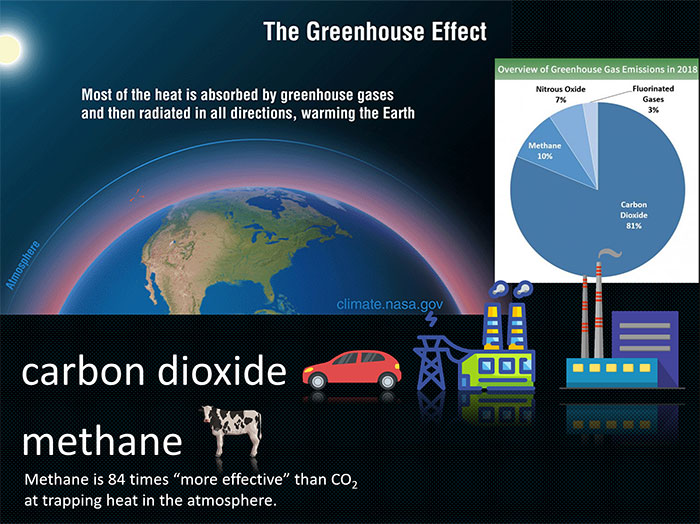
As temperatures rise, even slightly, various ecosytems change (melting icecaps, dying reefs, etc). If some organisms in the interdependent chain of life cannot survive, it throws off the delicate interaction of species and other species may perish, eventually leading to losses that humans care about (food sources, oxygen producers, etc) and potentially large environmental collapse, leaving people starving, sick, or unable to live in their new environments.
Dead media vs living reality
Our escape into media consumption estranges us further from our actual embeddedness in physical nature. We may find "the environment" an unreal thing, compared to the "real" things we see in the images on our phones.
Individual action vs systemic change
Mitigation strategies - what we can do to fight global warming from carbon release
- Reducing our greenhouse gas emissions (this is the one we can all do now)
- Carbon capture - creating technology that can capture the carbon wherever it is released (expensive)
- Reabsorption strategies - planting forests, protecting greenspace, keeping the oceans healthy
- Geo-engineering (not yet a real option at this time)
What can you personally do about climate change
- political action - the most important; our leaders need to get a message from us that we want them to act to minimize the destructive potential [THE MOST IMPORTANT THING YOU CAN DO]
- personal lifestyle/culture changes.
Lifestyle and culture changes
- Drive less - take public transport, ride a bike, walk, carpool
- Consume less - repair and reuse things, avoid retail therapy, buy second hand
- Eat less cheap meat
- Do not invest in AI; avoid using AI
Cheap meat
The factory production of meat and dairy has a huge impact on greenhouse gas emissions. Cattle produce enormous amounts of methane; forests are destroyed to create grazing land, removing natural carbon sinks; and meat and dairy are processed and transported large distances in ways that add to the carbon footprint.
Of the animal weight on earth at present 97% is human beings and the animals we have domesticated, Only 3% are animals living in the wild.
- Eat less meat and dairy; go vegan when possible
- If you do eat meat or dairy, buy local, organic, naturally raised products whenever possible
- Don’t waste food; consume more carefully
- Grow your own (I've done it; it's fun and really makes you appreciate what goes into the food we eat)
Don’t invest in fossil fuels; don’t invest in cryptocurrencies and NFTs; don’t invest in AI
It typically takes 10 times as much energy for AI to find answers to your questions as it does for you to google for those answers yourself.
Normalization and sustainable living
Normalization is the cultural process through which new social norms evolve and become established. What we did with smoking could be done with carbon emissions and hyperconsumption. A combination of governmental action, media representation, and personal lifestyle changes could make it normal to live sustainably and care about the environment. You choosing not to eat cheap meat, shopping at thrift stores, or taking transit would help model this new norm for other people - help to normalize caring about the environment and our impact on it.